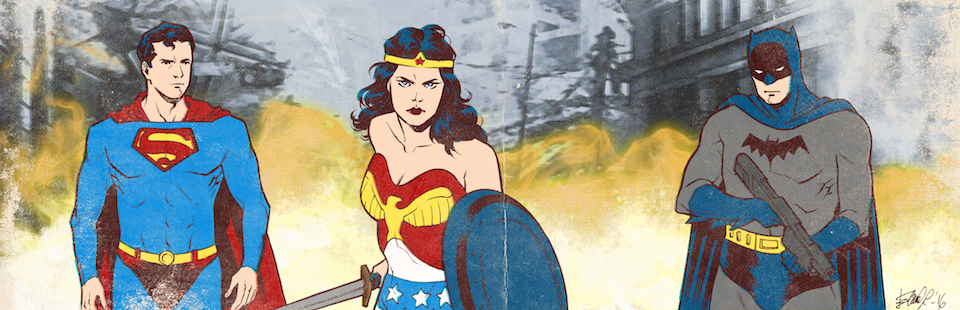
Superman For the Animals

One of my favorite things to do at comic book shops or at conventions is to spend time going through the sales boxes. You’ve all seen them. Long boxes stuffed with issues of anything and everything marked down to irresistible prices – sometimes as low as $0.25 each! I’ll admit that I occasionally use the issues I find in the cheap seats for crafting (look, decoupaging is an addicting craft and I want to cover all the things with images from comic books). I mostly use the bargain bins as a tool to find new stories and to get to know new characters. For example, I’ve read just enough about Superman to know I want more. Cue the $1 bin.

I’ll rifle through and pick out a stack of titles from different writers and eras. It’s a nice sampling, and if I like what I read I’ll find more. Sometimes I’ll pick out comics based on the cover alone (like picking wine for the label). When I was flipping through a box and spotted a cover featuring Superman holding a cat, I was sold. I expected Superman For the Animals to be a nice, fluffy story along the lines of Superman rescuing a wayward cat from a tree.

supermanfortheanimals1

I was so wrong, and I might be scarred for life.

Superman For the Animals is essentially a PSA about animal cruelty. It was published in 2000 and made available for free – DC Comics partnered with the Doris Day Animal Foundation for the comic written by Mark Millar and drawn by Tom Grummet and Dick Giordano (some interesting history on how it came to be here).

A young boy named Tommy is new in town and has fallen in with some troublemakers. One kid in particular – the leader Ballser – is a special brand of horrible. He takes pleasure in picking on animals. He bullies the other kids in the group into helping him with his sadistic obsession. Tommy’s torn between making friends and fitting in and doing the right thing. Ballser starts with kicking some pigeons. Then he tortures a goldfish. He takes it to another level and throws a cat over a bridge! A poor, helpless cat.

That’s where Superman swoops in. He arrives and saves the cat from doom. You see, Tommy had written to the superhero and asked for help. When Ballser sees who interfered with his twisted plan, he’s ticked. He calls Superman a “Boy Scout.” Seeing Superman intervene inspired Tommy to speak up – especially once Ballser insulted him in the same way. It made Tommy realize he could be like Superman too. He just had to stand up for what’s right.

The final straw is when Tommy makes a chilling discovery. Ballser actually has a collection of trophy collars. Tons of them. What the heck. I had to stop and get a tissue.

Tommy mans up and talks to a teacher. Ballser gets help, and Tommy and the gang move on and even volunteer at an animal rescue. Tommy realizes he too can be a superhero, and everyone feels warm and fuzzy. Which is desperately needed at that point since you’ve been reading about animal deaths.

superman for the animals cat

Seeing animal cruelty is hard for me to stomach – even in a comic book – but I can’t deny Superman For the Animals sends some worthwhile messages. Superman saves a kitten and by doing so helps make sure a child gets necessary mental help, and shows Tommy how to be a hero as well as showing him how right it is to stand against evil. It illustrates that Superman can save the day in more ways than just taking down villains. There’s also an anti-bully theme that’s good for anyone to read. The story isn’t afraid to take on the hard stuff. If it made a lasting impression on me, I bet it definitely affected children. I hope it prompted some discussions with adults about animals and their feelings and value.

Continuity, Superman, and Alan Moore

Continuity is a tricky beast.

When you’re telling stories about a character for years or decades, there have to be common ties. You need consistent places, familiar villains, and constants that can revolve around and tangle with the protagonist’s ongoing story. Ten years of one shot issues or unrelated mini-series don’t work as well. You get to know the main character better and care about him or her more through his interactions with the world around him, and if that world is constantly changing you’ll be expending most of your energy just to keep up with the different landscapes and people.

The flip side of the continuity coin is that years of history can equate to a giant mess. When dozens of different writers and artists play in the same pool, it gets crowded. Sometimes it’s a gross mix of algae and neglect, other times it’s a sparkling Olympic-sized playground with room for all. It depends on the characters and how long they’ve been around. Some superheroes have been around for over fifty years; it’s impossible to keep the chemical balances perfect in that water. And that much existing framework can intimidate new readers.

I’ve said it before and I’ve heard it many times: where do you start with reading comics? When faced with a shelf of current Batman issues that all seem to be pursuing different arcs how can you know where to begin? Hopefully each issue is set up so that a new reader can dive in without catching up on twenty issues, but I don’t feel like that’s a fair expectation. After all, we don’t usually jump into television series midway through the second season with the assumption that we’ll know what’s going on. In fact, I think it can be somewhat insulting. “Hey creators, I know you’ve worked really hard on the last ten issues but I’m going to jump in on issue #11 and be ticked at you when I can’t tell what’s happening.”

I’m a huge fan of recap pages, but I also understand bringing newbies up to speed in every single issue isn’t always possible.

Take a character like Superman. Comics featuring the hero have been published since 1938. Seventy years of stories. Just like any other character that’s been around for a while, there’s a huge stack of reboots and do-overs and history and not all of it is fantastic. There are times when the appearance of the same ole villains and love interests get stale, and I’m sure it has to be frustrating as a creator to work within the current boundaries of continuity. It limits the cast of characters, it can change what Superman knows, and on and on. Being freed from that pen has to be fun… and maybe a little scary.

When you can use the whole universe in your story, which parts do you focus on? You could single out one or two villains and a few companions, or you could do what Alan Moore and Curt Swan did in Whatever Happened to the Man of Tomorrow and bring in everyone.

It doesn’t seem like an idea that should work. Honestly, it sounds like a formula for disaster. But the last Silver Age Superman story is a perfect example of what can happen when the door is left wide open – I know it’s not the only one out there and I’m not saying I want more stories that are off the timeline rails, but they can be gems. This one in particular shines bright.

In the then-future of 1997, a reporter from the Daily Planet visits Lois Lane to learn about the tragedy surrounding Superman’s death. She relates the events through flashbacks. Superman’s villains start turning deadly and it all leads to the penultimate battle at the Fortress of Solitude.

Action packed is an understatement.

One of the impressive parts is that it manages to be that but not feel rushed. A crazy number of Superman’s supporting cast show up over the course of two issues: Bizarro, Toyman, Prankster, Lex Luthor, Brainiac, Pete Ross, Krypto, Lois, Lana Lang, Jimmy Olsen, and many more. On the surface it seems like a recipe for a horribly over-mixed drink. It’s blended with perfection though. Where else would Superman’s closest friends be in his time of greatest need? He gathers them around to protect them, but they would have come running anyways.

The plot twists and runs to what becomes Superman’s last stand. The consequences are very real. Loved ones die. Krypto sacrifices himself in a heartwrenching scene. And finally, the last straw: Superman kills his greatest foe. He crossed the line he said he would never toe, and he very calmly hangs up his cape and gives up his powers.

Whatever Happened to the Man of Tomorrow is successful across the board. From what I’ve read of Superman, it stays true to the character. That’s awesome, but I’m more impressed with how it’s a story that a newcomer to comics can read and love, someone like me who doesn’t know a ton about Superman’s background can devour and be enthralled and moved, and that someone who is fanatic about the hero and has connections to all the characters who appear in the issues can get excited about and love. It truly is a story for everyone, and when it comes to characters with a long history, that’s just not common.

Superheroic Fun in the Fifties

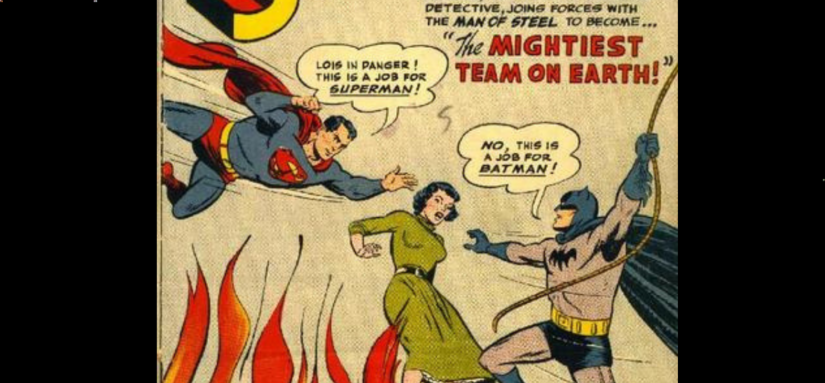
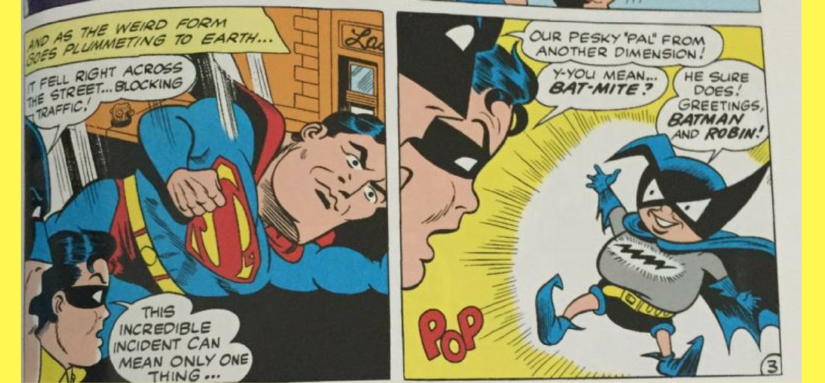
My week has been vastly improved by reading Superman In The Fifties and Batman In the Fifties for the first time. Though I haven’t read much Superman before (just some of the new 52 Action Comics), my past experience with Batman is that it’s not always a happy ride. Okay, that it’s rarely a happy ride. That’s okay. Conflict drives character development and the more serious stories often shine through as the best. I get it. But darnit. I like to smile and these comics fit the bill.

Very little of my laughing while reading these books was because of ridiculousness, it was usually sheer enjoyment. Usually. Sometimes I had to poke fun. I loved being reminded constantly that Superman was the only survivor from Krypton only to have a new visitor show up from Krypton every few dozen pages. Krytpo, Supergirl, the Three Supermen. Lois Lane’s silly, lovesick comments about Superman cracked me up because they were in such stark contrast to her cleverness.

Superman #79

Batman doesn’t get off the hook either. Even in this era, Batman and his stories seem a touch more serious than Superman’s world. Except for the time he managed to lose his utility belt. His detective skills lead him back to it, but you’d think given his skills and intellect he’d have had some sort of failsafe in place. It was Batman, and even if no one else in the world had tracking devices, it seems like he would have. Still. It gave us the opportunity to see the utility belt used to hold a kid’s marbles.

Besides the lighthearted tales, it was a time of telling instead of showing. The number of letters per panel is impressive; the word balloons often take up more than half the panels of an entire page! This might have been harder for me to process if I hadn’t just come off the text heavy EC Comics. The difference is apparent though when you switch between the fifties titles and modern-day issues. I don’t think there are many – if any – splash pages in the Batman and Superman fifties books. Hell, there aren’t even any panels without words. It’s fascinating to see how storytelling has changed since then and to think about how we as readers have influenced that change.

Flashbacks played a part, too. For a reader like me who doesn’t know about either hero’s previous exploits, they were handy (even if it meant more words on the page). In particular, going back to visit Smallville got me. Superman relives his last day in the town in issue 97, and it almost made me teary.

Superman #97

It’s possible to pack emotion in the lighter stuff, and both Batman and Superman nailed the combo in this era.

The moral of this story: don’t be ashamed to like something just because it’s fun. As I just discussed with a friend this week, not every book, TV show, and movie has to withstand critical examination. Everything you consume does not have to be the best story ever. Fun for the sake of fun should be embraced. It’s okay to just want to be entertained. And oh, are these ever entertaining.

Come see our L.A. location!
5118 Lankershim Blvd
North Hollywood, CA 91601
(818) 980-BOOK

Connect With Us

Search