Jud Meyers’ ReTales – Nobody Knows Who You Are

I loved Sesame Street, didn’t you? Loved all the puppets and animation and lessons about life. But you know what I loved more? You know what was always more up my “street” when I was a kid spending half of my growing years on the streets of Manhattan?

The Electric Company!

Unlike Sesame Street, it was predominately populated by real people. Adults who acted out skits and used bold language and geared their entire show around not just life lessons, but the value of reading and words and examples of how to use them as tools for becoming adults ourselves. It was gruff sometimes and had a bit of a bite amid all of the bright colors and laughter. It was a little more back alley New York than Sesame Street to me. And it had two things that “The Street” didn’t have:

Morgan Freeman and the Amazing Spider-Man.

Yes, that Morgan Freeman. Yes, a live-action Spidey. Actors have to start somewhere and this was Mr. Freeman’s first stop on his epic rise. He was unbelievably cool and smooth and reminded me of the black and Hispanic adults I spent hot summers with in my friend’s apartments in Queens.

Electric Company had Afros and fringes and skits that were messy and improvisational. It was like Saturday Night Live for kids.

The Spidey of Electric Companyland had thought bubbles and crazy sound effects and basic animation of webs flying out of his hands. He was more of a dancer than a hero with the strength and agility of a spider. He could be overcome by villains like “The Wall”, “The Spoiler” and “The Sack”.

He flew out of art panel grids the TV Producers threw together to fit our small screens. He achieved the goal of exuding the comedic prowess of Spider-Man without actually being able to speak (other than the odd word balloon that popped out of his mask every now and again). Characters talked to him like he was mute, fishing for what he wanted like he was Lassie.

I’d heard from friends at camp that there was a comic book version of the Spidey represented on the show and I went hunting the first chance I could.

When I finally found what I was looking for, I didn’t end up with Lee and Ditko. I didn’t find Romita or Buscema (although they did the odd covers). I ended up reading the timeless stories written and drawn by those legendary creators Jean Thomas, Winslow Mortimer, Thaddeus Mumford, Kolfax Mingo and Bobo De’Lair. All creating the comic zaniness endorsed and promoted by Morgan Freeman’s “Easy Reader” character:

Spidey Super-Stories!!

This kid-focused title ran from 1974-1982 (one hell of a long run!) and, to my mind, resembled the Justice League Unlimited comics from the past few years. It was a forum for Marvel to introduce characters that kids might not normally know of in their limited Marvel comic reading.

Characters like Nova and Kid Colt (boys want to be Cowboys!), White Tiger and that ultimate anarchist, Hawkeye!

That’s one way to take down a rocket ship!

They also introduced us to Thundra, Spider-Woman, Ms. Marvel, Tigra, Storm, Moondragon (“She’s bald and she’s beautiful!”), Shanna the Jungle Queen and “The Cat” (Can’t use the word “Hell” in a kids book, can ya?).

These ladies were all obvious attempts to introduce female characters for the young female readers, but only produced supremely grateful grins from us “sprouting” young boys.

There were also an alarming amount of appearances by the Inhumans. I think this had to do with two things. One was that it afforded them an opportunity to give us some time with Lockjaw, one of the few Super-Pets of the Marvel Universe. And the other was that we had just been introduced to the film that would change everything for Science-Fiction in the comics, movies, books and television from the 70s to present day. I’m talking of course of Star Wars.

I know this because of two particular issues:

Issue #31 entitled “Star Jaws!” (co-starring the aforementioned Moondragon), in which she and Spidey go into space to fight Doctor Doom in order to save the planet. Did I mention this was in outer space?

And my all-time favorite, issue #39 entitled “The Cat and the Cosmic Cube!” in which Spidey and The Cat battle Thanos. Yup, Thanos.

In his “Thanos Copter”, which has his name emblazoned on the copter’s tail.

He beats up a little boy…

and comes after our heroes.

Cheese and crackers!

Then, after he’s defeated by the dynamic duo, he gets handcuffed and put in a police car so he can get taken downtown and booked.

WOW.

So we had a super-cool mash-up of Spider-Man, the superhero who couldn’t be more grounded to the city sidewalks, with outer-space invasions in Central Park!!

Not only that, it had “Scooby Doo” guest appearances by the cast of the Electric Company. Real people. People that didn’t leap from the page to the screen, but did the exact opposite. Running around Marvel’s Big Apple, always reminding us that reading is cool and that Spider-Man was, well, real.


Jud Meyers’ ReTales – A Study in Scarlet

We talk a lot here about comics. We talk about the stories and the interior art chores and the characterization. We talk about “key” issues and first appearances. We talk “line-ups” and “team-ups.”

But we all know what really gives us the biggest charge from comic collecting. What reaches into the depths of our brains and illuminates a moment in time from our personal histories. What reminds us where we were when we first held, read, bought a specific comic book. What we wore in those days. Who we were dating. What our favorite foods were.

It’s the covers, damn it!

While thinking about writing an Avengers column, I dug back into my memories and was reminded of just how many memories were trapped in my brain that revolved around these particular images. Preserved in amber in this head of mine that couldn’t tell you as I write these words where the heck my keys are.

Maybe not the most important issues in Avengers history, but important to me. Important because of their timeline in my evolutionary growth as a reader and comic fan.

AVENGERS #161: Bugs crawling all over our heroes. The truly weird part of this cover wasn’t that it creeped me out. It was that I was just feeling the tingle of my pre-teen years and the Scarlet Witch totally turned me on. Bugs and chicks. It explains a lot about who I’ve become.

AVENGERS ANNUAL #7: Jim Starlin. The Avengers in an  “Epic Cosmic Conflict!” It’s Avengers Star Wars.

AVENGERS #167: The Avengers in space again! The Beast taking the lead! The beginning of the ten-part (10!) Korvac Saga! Weird-ass aliens from the future! Doesn’t get any better.

AVENGERS #177: The last of the ten-part Korvac saga. Don Blake, his little doctor’s bag open, just pounds on everyone, sweat dripping off his brow. It’s violent and it disturbed me. And Wanda is in need of some serious mouth-to-mouth.

AVENGERS #181: One of those “the old guard changeth” covers, where everyone is hovered around the Avengers table-round, terribly afraid of the dude with the orange crew-cut. Gyrich. What a great villain.

Even better was the interior scene, where a totally different Avengers crew is seated around the table, and this time they all look like they’re going to kill this guy. Did I mention Wanda is in full-on dominatrix mode? Whoo-baby!

AVENGERS #187: There’s Wanda again. Only this time, she’s seething evil. A devil dominatrix, enjoying every minute. Again, it explains a whole lot.

AVENGERS #189: I always loved those “WHO?” “WHAT?” “WHY?” “WHERE?” covers. Pretty much any comic cover that asked me questions piqued my interest. It was like a game show and I had to open the pages to see how I did. And, umm, Wanda’s on the cover…

AVENGERS ANNUAL #10: This time, it isn’t questions thrown at us. It’s a series of temptations. “SEE!” “WITNESS!” “OBSERVE!” “BEHOLD!” There’s also a “Shock mystery guest!” and a great, incredibly tiny depiction of an Avengers vs. X-Men scene, with Wolverine giving them his version of the “finger”. Ever notice that Wanda and Hawkeye share the pointy-mask-headress thingamajig?

AVENGERS #223: Wow. Just brilliant. A cover conceived by the great Ed Hannigan. Ant-Man looks like he’s going to literally fly off the page and up our noses. If only Wanda was on the cover, it would have given a whole new meaning to the “SOMEBODY’S GONNA GET IT!” line.

There’s more, but I’ll wait until next week. Right now, I’m going to turn off my computer and go reminisce about a woman named “Maximoff”, the lady in red who did so much for me in the 70s and early 80s.

Yeah, I know it’s weird! But don’t you dare tell me you don’t have a favorite of your own that kept you up at night. And just maybe that cover is still hidden away in your closet for those very special and veeeery personal occasions…


Jud Meyers’ ReTales – The Silver Age Lives!

The Silver Age of comics. Writers and artists just plain having fun. If they had a crazy idea, the editors joked about it, made fun of each other for coming up with the crazy notion and then? Well, they spent a bucket of money and published it for millions of readers to see.

Batman becomes a fish!

Batman becomes a baby!

Jimmy Olsen becomes…everything!!

An entire decade passed with DC Comics filling an unsuspecting readership of kids with abstract and absolutely preposterous tales. Nothing was off-limits and nothing too far outside the atmosphere of planet ridiculous.

A purple and yellow Batman from the Planet Zur-En-Arrh who has a Bat-Radia device that can jam atmospheric-molecules?

What, you think Grant Morrison made that crazy shit up? Nope. It was France Herron, known for the creation of that international superhero megastar, Pinky the Whiz Kid!

Some of the greatest writers in comics passed through the wackiness of the Silver Age and made the transition from the levity of the 50s and 60s to a darker, more realistic Bronze Age of the four-color world. Some made their start in the 70s without retaining even a kernel of the wake behind them.

But some? Some retained the spirit of Schwartz-inspired genius and carried it in their utility belts through the ebony streets of the 70s and into the bright, shining 1980s. An era of over-publishing and acres and acres of dead trees. And one of my all-time favorites might surprise you, dear reader. I speak of none other than…

Paul Kupperberg!

Writer of over a billion absolutely preposterous and knee-slapping tales that helped define an era where marketing and advertising elbowed its way into comics and brought with it an onslaught of stories created from action figures and animated TV cartoons.

Rather than fight back against “The Man”, he embraced the opportunity. Writing original promotional comic books for the likes of Radio Shack! Power Tool Institute! Bariatric Health Institute! Silly Putty! Fruit-of-the-Loom! And that comic inspired corporate entity known only as, Schering-Plough Pharmaceutical!

It ain’t easy writing stories about characters known for their toy cars, underwear and bedspreads. But Kupperberg just had his finger on the pulse. He knew who he was writing for and all of his stories read like they leaped out of Schwartz’ filing cabinet. I won’t waste time listing his credits as I’ve only got so much space and my editor would kick my ass. Just go to Wikipedia and scroll away.

And if you get a chance, go hunt for four years worth of the brilliant Arion, Lord of Atlantis. Sublime.

Or how about the first comic book adaptation of He-Man and the Masters of the Universe? Right? Right? ‘Nuff said.

So why the heck am I writing a column about 1980s Paul Kupperberg when this is Silver Age month at Blastoff? It was a happy accident! While I was digging through a stack of Silver Age comics for inspiration, I found one of the best examples of 1950s Silver Age writing. Written in 1986.

It’s a shining example of how much staying power the Silver Age has and how it will never, ever go out of style. It’s a brilliant piece of work (written by you-know-who), filled with all of the bravado of a Silver Age yarn. Ladies and gentlemen, I give you:

SUPER POWERS #3!!!

What? You say you’ve never read it? Genius!

Inspired by the Kenner DC toy line of the same name, this series featured designs, writing and art by comics legend Jack Kirby. Guess who paid Kirby the first (and probably the best) royalties of his career? Not DC. Not Marvel. A toy company.

From soap to socks to peanut butter, this line of toys infiltrated children’s homes in a way the average comic book pamphlet never could.

We’ll delve into toys and their storied history within the comic community in later columns. Right now, I want to keep the focus on the guy who picked up where Kirby left off on the series and who, with the absolute madness of Carmine Infantino on art chores, did something no DC writer has ever achieved before or since.

He had Darkseid lose his powers, resort to breaking and entering a department store for an ugly coat and fedora and get his ass handed to him by two young thugs in an alleyway. And then see it as a “teachable moment”.

If that isn’t the ghost of Silver Age Christmas past visiting us, I don’t know what is.

What else do we have inside this fantastic piece of comic book calamity? Well, we’ve got appearances by these extremely well-known DC characters:

“Samurai”

“Cyclotron”

“Tyr”

“The Golden Pharoah” (who likes to say things like, “By Jove!”)

“The Organic Man” (whose power is that his costume is made of organic matter, allowing him to defeat the fury of Firestorm because Firestorm’s powers don’t work on anything…organic. Wha-huh?)

“Sensus” (who has “forsaken his sight and its distracting illusions” in order for his other senses to become super-heightened)

“Man-Mountain” (Nothing can move him!)

“Trapeze” (who defeats Batman because he’s a “clumsy amateur”)

and who can forget…

“The Mechanic”(who can stop in the middle of any battle and dismantle any electronic device, or engine, or phone line, or…well, you get the idea.

We also get an appearance by “Janus, Son of Jupiter”, who Wonder Woman immediately falls head-over-heels for.

In one panel, Infantino has Wonder Woman literally daydreaming about doing God-knows-what with this guy. Brilliant!

But wait! There’s more!

A 12-page insert, hawking the new “Mask” comic book and line of action figures, underoos and big wheels.

An ad for the DC Heroes Role Playing Game.

And a full-page interview with none other than Pharoah, Samurai, Cyborg, Captain Marvel and Cyclotron in which the DC “interviewer” asks about each characters secret origin and when Plastic Man is asked the biggest advantage to having his superpower, he replies, “I’ve saved a lot of money by never having to buy a remote control TV.”

Damn!

I love this stuff. And I love that the spirit of the Silver Age will always live on in the pages of our comics. Even if it gets more and more obscure with each passing generation. They may not know the secret origin of this zaniness, but they get to enjoy it just the same.


Jud Meyers’ ReTales – A Ray in the Night

I met Ray Bradbury in a dark basement in the suburbs of Long Island. He hit me on the head with a tremendous force and sent me reeling backwards through a plywood door and into an old washing machine. I sat stunned on the floor of my mother’s laundry room, listening to the growl of the churning clothes and staring into the darkness, frightened.

You are a child in a small town. You are, to be exact, eight years old, and it is growing late at night…

I’d been reaching for the very top of the vast bookcases my mother had rigged under the house, grabbing blindly for the next “Encyclopedia Brown” adventure. Mom had introduced me to these wonderful “choose your own” adventure books that summer and I couldn’t get enough of them. My fingertips grazed Mr. Brown, but knocked Mr. Bradbury loose instead.

There were hundreds of books on those shelves, in stark contrast to my father’s house across the country, its rooms devoid of the written word in any form. She packed them atop wooden slats held up by large cinderblocks. They were in no discernable order, which made it all the more exciting. What’s a book really, without the thrill of the hunt preceding it?

If my brother were there, he’d have easily grabbed it for me. Older, taller, stronger. He had gone back to our father when the summer came to an end while I chose to stay behind for good and all. I missed him.

Skipper is your brother. He is your older brother. He’s twelve and healthy, red-faced, hawk-nosed, tawny-haired, broad-shouldered for his years, and always running. He is over on the other side of town this evening to a game of kick-the-can and will be home soon. You both sit there listening to the summer silence and staring out into the dark, dark, dark.

My head was bleeding a bit and it throbbed something awful, so I stayed there on the floor awhile, listening to the hard-at-work clothing and cracking open this angry, violent book that had attacked me. Its cover alone brought the room a sudden chill.

The story was called “The Night” and it took me altogether by surprise. It was my first experience reading a story where what the author chose to say was almost as emotionally charged as what he didn’t. It spoke to me. It spoke to my life experience up until that point. I stopped after every page, looking up and half expecting the author to be standing in front of me, laughing.

The basement was my place. I’d turned it into a sanctuary, complete with bed, television and the requisite stacks of comic books. I spent most of my time down there (much to my mother’s dismay). Sure, it was spooky, but what isn’t when you’re a young boy?

It had been many years since I’d really lived with my mother. She got my brother and I for the brilliant summers, but the rest of the year was reserved for my father and his off-kilter existence.

I suppose we were still getting to know each other. Being a father now, I can’t begin to imagine how difficult it was for her, sending us off on a plane at one end of a year and seeing us return on the other, stretched, sprouted, transformed.

You and your mother are all alone at home in the warm darkness of summer. The town is so quiet and far off, you can only hear the crickets sounding in the spaces beyond the hot indigo trees that hold back the stars…

My father was devastated when I called to tell him that I wasn’t coming home. He felt ambushed, betrayed. I tried to explain that I wanted to just “be with mom for awhile,” but that wasn’t altogether true. How could I tell him how stifled I felt in our house? How little promise there was in its illiterate rooms? How little wonder?

I couldn’t put into words how frightened I was to leave him and to let go of my brother’s hand. But I also couldn’t bring myself to explain how empowered I felt taking my mother’s.

“I wonder where your brother is?” Mother says after a while. “He should be home by now. It’s almost nine-thirty.” Mom sits down a moment, then stands up, goes to the door, and calls.

“Skipper. Skipper. Skiiiiiipperrrr.” Her calling goes out into the summer warm dark and never comes back. The echoes pay no attention.

And as you sit on the floor, a coldness goes through you. You notice mom’s eyes sliding, blinking; the way she stands undecided and is nervous. All of these things.

You take her hand. Together you walk down St. James Street. In the back of the church a hundred yards away, the ravine begins. You can smell it. It has a dark sewer, rotten foliage, thick green odour. A jungle by day. A place to let alone at night.

You are only eight years old, you know little of death, fear or dread. Death is your little sister one morning when you awaken at the age of seven, look into her crib and see her staring up at you with a blind blue, fixed and frozen stare until the men come with a small wicker basket to take her away. Death is when you stand by her high chair four weeks later and suddenly realize she’ll never be in it again, laughing and crying, and make you jealous of her because she was born. That is death.

I had read five pages and I was terrified, mesmerized, giddy and dreadfully sad. Five pages! It felt like fifty.

Some of the greatest stories are the shortest. The greatest television shows. The greatest movies. And of course, the greatest comics.


The Ravine.

Here and now, down there in that pit of jungled blackness is suddenly all the evil you will ever know. Evil you will never understand. All of the nameless things are there. Later, when you have grown you’ll be given names to label them with. Here at this spot, civilization ceases, reason ends, and a universal evil takes over.

You realize you are alone. You and your mother. Her hand trembles. Is she, too, doubtful? Does she, too, feel that intangible menace? Is there, then, no strength in growing up? No solace in being an adult?

If you should scream now, if you should holler for help, would it matter?

Thank God for storytellers who can write such short, sharp, shocks that reach out and grab the lapels of young readers and old alike. Who don’t belittle those still developing minds. Who push the boundaries and inspire them to work their imaginations that little bit harder.

It is indeed a seduction of the innocent. A beckoning into a greater understanding of not just the world, but of themselves. Sometimes, what’s required actually is a “snare,” an “enticement” and a “charming attraction” to coax growing minds to blossom. And sometimes, it isn’t just the light that makes them grow. Sometimes, it’s a hint of the dark.


There are a million small towns like this all over the world. Each as dark, as lonely, each as removed, as full of shuddering and wonder. The secret damp ravines. Life is a horror lived in them at night, when at all sides sanity, marriage, children, happiness, are threatened by an ogre called death.

Mother raises her voice into the dark. “Skip. Skipper!” she calls. Suddenly, both of you realize something is wrong. Something very wrong.

It is as if the whole ravine is tensing, bunching together its black fivers, drawing in power from all about sleeping countrysides, for miles and miles. In ten seconds now, something will happen. The crickets keep their truce, the stars are so low you can almost brush the tinsel. There are swarms of them, hot and sharp.

Growing, growing, the silence. Growing, growing, the tenseness. Oh it’s so dark, so far away from everything. Oh God!

At this point, I was huddled into a tiny ball, fingers jammed into my mouth as I tore my fingernails to shreds. I put the book down in my lap and considered throwing it into the corner and leaving the basement forever. Is this what reading is?! Is this what I have to look forward to? Constant anxiety about the next page, paragraph, word?

I cried. I cried for my parental tug-of-war. For my loneliness. For my brother, not there to look up to. For my sister, long since passed, who I would never, ever know. I cried, not knowing why.

And of course, I read on.

And then the quick scuttering of tennis shoes padding down through the pit of the ravine. Your brother, Skipper. “Hi mom! Hey!”

She puts away her fear, instantly. You know she will never tell anybody of it, ever. It will be in her heart though, for all time, as it is in your heart, for all time.

You walk home to bed in the late summer night. You are glad Skipper is alive. Very glad. You go to bed, shivering, beside your brother. You smell the sweat of Skip beside you. It is magic. You stop trembling.

Nine pages. The story was nine pages long. It was fierce and breathtaking and I was completely exhausted. It was everything a good novel should be. It had everything it was supposed to have. And it was over in a heartbeat.

Obviously, I went on to read every single piece of fiction Bradbury ever put to paper. And I carry those damn spaceship dreams to the very present day. But that night?

That night, I put the book down and went upstairs to the kitchen. I hugged my mother and helped her make dinner. I called my brother and told him I missed him. I sent my father love, even though he wouldn’t come to the phone. And I thought of my sister and all of the many wonderful things I would never fully understand.


Jud Meyers’ ReTales- “Aww, Hell.”

Hell’s Kitchen. Midnight. The sounds of the city hover in the air like dark messengers, bearers of things that go bump in the night. This is where Matt Murdock calls his home. This is where the downtrodden of the city come to seek shelter. This is where Matt comforts them as a lawyer in the daylight hours and patrols the dangerous back alleys as a crime fighter at night.

This is where there are…

Green trees? Refurbished brownstones? Doormen ushering in suits and ties to their apartment buildings? A bustling Equinox gym and a lovely Whole Foods on the corner?

Ummm…

Marvel has always strived to bring the “real world” into their four-color pages. Unlike DC books, where fantastical cities only resemble the ones we see outside our windows, Marvel’s readers get to imagine the actual streets and buildings they wake up to every morning. Streets filled with their favorite heroes webbing themselves to your apartment building and stopping traffic on 5th Avenue while they stop a robbery in progress. Or, if you happen to live in a more out of the way part of the country, heroes bumbling their way through the Great Lakes. Yes, you heard me. Go look it up!

So here I am, in the city of my youth. I’ve flown to Manhattan to yet again experience its beating heart. The heart that has so very often been at the center of the Daredevil comics Marvel’s been churning out since the 1960s. It’s not just the city where Murdock and Nelson’s law office resides. It’s not just the city where you can stroll up and ring the buzzer to Avengers Mansion. It’s a character in and of itself.

While it’s always been wonderful to imagine visiting the “Flash Museum” in DC’s Central City, imagining Spider-Man battling the entirety of his Rogues Gallery as they tear through the walls of the Museum of Natural History always appealed to me just a little bit more. It always seemed to be less a question of “what if this really happened,” but more a question of “what if this really happened here?”

So you can imagine my dismay when I rounded a city corner and stepped into the circle known as Hell’s Kitchen, a neighborhood my friends and I steered clear of in High School, and was hit not with the sounds and smells I remembered from the past (screams and urine), but with a much more shocking experience altogether. Peace and quiet.

Manhattan has always been on the cutting edge of construction and development. Even as I write these words from twenty stories in the sky, the night is filled with sounds of jackhammers and swinging cranes. It’s also known for its relentless gentrification. Money inevitably pushing the impoverished wherever it needs it to go, which more often than not, amounts to “anywhere but here.”

It was only a matter of time before the real estate tycoons that drive the economy of one of the most wealthy cities in the world, looked up and saw Hell’s Kitchen as a neighborhood of opportunity rather than a dumping ground for the lepers and outcasts of “New Amsterdam.”

In just ten or fifteen years, this once dark and brooding part of town has become a highly sought after piece of the New York pie. It’s got waiting list upon waiting list for the affluent seeking coveted living space.

Not very romantic, is it?

But that’s the beauty of a comic book. It can freeze time and make an entire city or state or country become whatever it needs to be to fit itself into the puzzle of a story. It can make the President find himself at a moral crossroad as he strikes a bargain with Norman Osborn. It can unite an entire country in a way that no “Occupy” movement ever could as it comes together to once and for all, rid itself of the Hulk’s reign of destruction.

And it can keep the magic of the dirty, sweaty, crime-filled streets of Hell’s Kitchen trapped in the unchecked comic book brilliance of the sixties and seventies.

A neighborhood where the Daredevil prowls its boundaries, making it crystal clear to the Kingpin and the rest of the heroes and villains of the world that this is “his” neighborhood and these are “his” people.

A neighborhood where Daredevil is looked to by the average resident as their savior and only true protector.

A neighborhood cut off from the rest of the world, with its own set of rules, its people following their own political agendas and struggling to put food on the table and keep from falling into the pit of poverty and starvation.

Or is that Doctor Doom and the people of Latveria?

Ummm…

Jud Meyers’ ReTales – “Number 158″

The following column first appeared December 18, 2008.


Ready?

I no longer consider myself a comic book collector. There, I said it. It’s out in the open.

I have no longboxes in my closet. No special “runs.” No complete limited series. It wasn’t always this way. You don’t become a comic retailer unless you’ve got some kind of obsessive history with the medium. I began collecting comics when I was eight years old and relentlessly hunted and gathered right up until I started my first business. But the day I began my life as a reseller, my life as a comic book collector ended and my life as a conduit began.

It was difficult at first to stop the addiction. No going cold turkey for me. I was willing to sell the tens of thousands of books I’d amassed in my lifetime. That was my start-up inventory and the foundation for future
growth. But still, I secretly coveted.

I’d take out the complete “Miracleman” run with every intention of putting it out for sale. Then after reading through it for the umpteenth time, it would somehow make its way back into the bottom of a “to be processed” pile. From 1950s “Green Lantern” issues to the complete epic that was “Preacher,” there were still books I couldn’t get out of my system.

Little by little, day by day, my stubborn insistence on not letting go dissipated. A need to pay the rent and feed my family helped immensely. Soon, the piles of “untouchables” began flowing out into the hands of my customers and over time, I even began to feel happiness watching them leave the nest.

After years of practice, I’ve become a middleman. My deep-rooted desire to fill the gaps in my collection has been replaced with a desire to fill the gaps in yours. Hunting and gathering is still a part of my daily routine, of course. I’m a Jedi Knight when it comes to filling out inventory and I’ll always be the guy who can “get it for you.” But I’m no longer one of you when it comes to periodicals. My genetic make-up has been irrevocably altered.

Don’t get me wrong. I read every damn book I can get my hands on. I’m voracious and my appetite for what goes out on my racks is unstoppable. Whatever you think you know about the current storylines, it’s my job to know more. My love of the stories and what goes on inside the panels has grown larger than I ever thought possible. And with the transcendence of the graphic-novel market, I get to revisit all of the joy of my own personal reading history without having to dig through boxes to remind myself how the stories ended.

Sure, I have a small warehouse I can visit that’s filled with all of the back issues being collected into beautifully re-mastered hardcovers. But those are for my customers. I’ll admit to ordering a personal copy of the odd Absolute Edition or a statue here and there. But for the most part, I’ve let go of the emotional touchstone of holding a back issue in my hand and feeling the need to tuck it away, knowing there are many others in the world like it, but that one is forever mine.

For the most part.

Yes, there’s still a comic book that I can’t help but covet. Dear reader, I’ve tried to let it go. I’ve had spans of time where I’ve been able to get it off my mind. But I fear that I’ll never truly be able to rid myself of its power and the hold it has on my spirit. It’s surely not the book you’ll be expecting. It’s definitely not the one I thought would still remain above all others. But as with all of us back-issue junkies, it’s the emotional landscape of an old comic that drives our need to own it. Between its pages lies a key to something crucial that makes up who we were and how we came to be whom we are today. The book that haunts me?

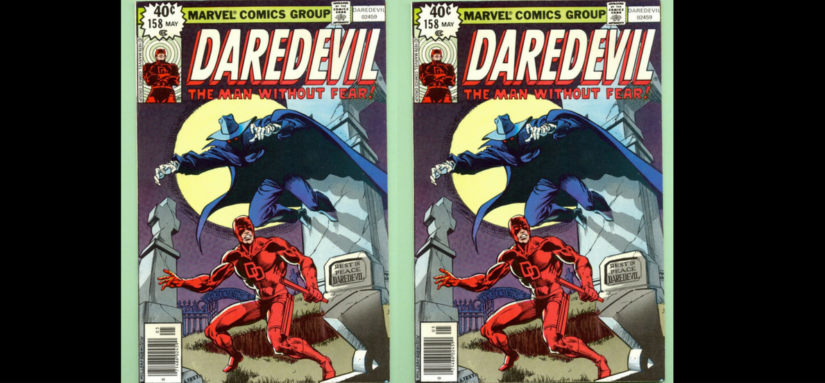
“Daredevil” #158.

Strange, I know. Sure, it’s the first Frank Miller Daredevil artwork. But other than that, the only thing remotely interesting about that story is that a fairly obscure writer named Roger McKenzie called on his wonderfully morbid “Creepy” and “Eerie” magazine days and killed off Death-Stalker by having him materialize in the middle of a tombstone.

It’s not the art that I can’t shake. It’s not the spooky little story. It’s because that particular comic book marks the first time I realized that the people you trust the most are sometimes the ones who cut the deepest. And unbeknownst to me, it marked a moment in my personal comic-book history that defines a very important aspect of who I am as a retailer.

I acquired my first copy of #158 just before the summer of 1979. I wasn’t much of a Daredevil fan, but there was something mysterious about the cover and when I flipped through it and saw a villain dying a horrible death, I had to own it. The art was dark and moody and I read it a few times in one sitting. Nothing too spectacular. Nothing that separated that book from any of the others in my regular stash.

In the summer of 1979, I still relied on my poor wicked step-mother to drive me back and forth to the comic-book store. My bicycle would only go so far and in California, a kid on a bicycle is an accident waiting to happen. The only obstacle I routinely faced was the fact that my step-mother hated, absolutely hated, driving me to feed my habit. So instead of weekly visits to spend the entirety of my allowance, I saved up for a monthly foray. It took some begging and pleading and extra housework, but it was always worth the sweat and tears.

For the next few months, I collected “Daredevil.” The art got darker and darker and it seemed that old DD was turning into some kind of ninja! Cool beans. Just at the end of the summer, not long before school was to begin again, I sat on my bed and flipped open my monthly bounty. One of my favorite things to read was the “Comics Buyer’s Guide.” Inside were classified ads and price guides for the latest comic book titles. I knew nothing of Robert M. Overstreet, so these ads were my only barometer for what comics were worth. That day, I scanned the listings and saw something truly spectacular. It seemed that my super cool copy of “Daredevil” #158 was now worth a whopping sixteen dollars!

Back then, sixteen dollars was a whole heck of a lot. And for a forty-cent comic book purchase, that was a serious return on my investment. I recall the uproar when comics went from thirty-five cents to forty. Folks were up in arms. They screamed in the pages of CBG that the industry would collapse. That readers couldn’t possibly afford that kind of increase during a terrible economic downturn. Sound familiar?

Now, I liked “Daredevil.” It was fun and seemed to be getting better and better. But there were mountains of titles I liked, and sixteen dollars would buy me forty (forty!) issues. So I hatched a plan. I would sell it back to the comic-book store and spread out the money for as long as I could. Every time I’d pick up my new comics, I’d add another couple of dollars to my allowance and try five new titles that I’d never read before. I could barely contain my excitement!

I boldly approached my step-mother, guide in hand as proof of my personal victory. How proud she’d be of me! Finally, she’d see just how special comic book collecting was. I wasn’t a nerd, I was an entrepreneur! Of course, I got the same heavy sigh. The same blank stare. But I begged, I promised, I negotiated. I’d do more housework, I’d walk the dog, I’d clean my room. Heck, I’d clean every room in the house! If only she’d take me to the comic-book store so I could collect my winnings. Gas prices were going up, money was tight and she wasn’t about to pretend to be enjoying the experience, but she relented.

I recall looking up at the counter. The manager was just an ordinary young guy, but all I saw was one of King Arthur’s Knights. He looked down and asked what he could do for me. I confidently pushed my copy of #158 across the counter and said, “I read in the guide that this is worth sixteen dollars. I’d like to sell it to you so I can buy some other stuff.”

He smirked, looked me up and down, tilted the comic into the light and said, “This one’s a reprint. It’s only worth about a dollar.”

I was mortified. “How can it be a reprint?!” I said. “I just bought it a few months ago.”

He replied, “It’s a hot book. Sold out everywhere. Marvel rushed out some more so people could read it.”

My heart sunk in my chest. The guide didn’t say anything about reprints. My universe was swiftly tilting.

My friendly neighborhood comic-book guy leaned down and said, “Look, normally I only give someone 20% of what a comic book is worth when I do a buy-in. But I can tell you’re a good kid. I’ll go up to 50% for you.” He then reached into the register, pulled out two shiny quarters and slapped them onto the counter. Fifty cents. My outrageous fortune had turned into the price of a Big Gulp.

I turned to look at my step-mother standing by the door of the shop. She looked at her watch, tapped her foot, glared at me and raised her eyebrows. As the sweat beaded on my forehead, I realized I had no choice. How could I face her and admit utter defeat? I’d lose any good will surrounding my hobby built up on this one visit. I might never be able to convince her to take me to get my books ever again!

So I looked up at the man I respected, the man I knew would never do me harm and I said, “Okay. I’ll do it.”

He took my #158, I took the fifty cents and nothing would ever be the same.

“Let’s go!” yelled my wicked step-mother. “I’ve got things I need to do today!”

I couldn’t leave empty-handed. I just couldn’t. But I was plain out of time. So I turned around and grabbed the first book I saw. I put it on the counter and told my comic book guy to ring me up.

“Seventy-five cents” he said.

I placed the two quarters he’d just given me back on the counter, added a third from my pocket and walked out with my purchase.

Worse still, I lied to my step-mother. Driving home, she’d asked me if I’d gotten the sixteen dollars. I told her I’d decided to trade the book for one worth twice as much. I held up the latest issue of “King Conan” that I’d just traded for my #158, pretended it was the Golden Palace of the Himalayas and wondered if I’d like this Conan guy as much as I liked ninja Daredevil. I didn’t. Still don’t.

A few weeks later, I was back to relieve myself of my allowance. I did my hunting, brought my books to the counter and said hello to my comic-book guy. As he rang me up, I looked behind him on the back issue wall. There, sandwiched between a couple of John Byrne “X-Men” comics was my copy of “Daredevil” #158. A big sticker announced the asking price. Twenty-Five Dollars.

“That’s my book!” I said. “You said it was only worth a dollar!”

“No it’s not,” said comic-book guy. “That’s a first print.”

“That’s my book!” I insisted.

He looked down at me, his eyes glowing in a way I’d never seen before and said “No. It’s MY book now.”

Tears welled up in my eyes. I could hear my heart break. Betrayed. Lied to. Tricked. I knew these things happened in the real world. But I never thought it could happen in a comic-book store. Comic stores were sacred. Immune to the darkness in men’s hearts.

I left my comics on the counter, walked out and never went back.

I’ve traveled to many places in the world. I’ve worked, owned and visited countless stores on my journeys. And I’ve purchased more copies of Daredevil #158 than any other human I know. If I see one, I buy it. Doesn’t matter what condition it’s in. I’m not sure why I do it. Maybe I hold onto some fantastical belief that one day, I’ll buy the one that was taken from me so many years ago. That I’ll know immediately the one I’m holding is the very one I lost. Of course, the comic isn’t what I lost that day. It was something more akin to innocence.

Folks stroll into my store every day looking to sell their comics. I treat every one with respect. I relish my reputation on the street as a fair and honest retailer. I try to always offer a higher percentage than my competitors, I break out the “Overstreet Guide” and go over my grading and pricing with whomever I’m buying from. We do it together. If we don’t agree, we don’t deal. I’ve had scores of young kids come in on my watch and I immediately recognize the gleam in their eyes. They pass their books across my counter, looking for treasure. For a golden ticket.

“Do you absolutely have to sell this comic?” I ask them. If they say “No,” you know what I tell them?

“Don’t.”

The holidays are here. Gifts are passing hands. Casual acquaintances will give me small gifts as kind gestures and I’ll be grateful for their intimacies. But for those who know me well, for those who know the sordid tale of #158, I know exactly what’s inside that loosely wrapped gift under my tree. And other than the love of my family and the clear-eyed truth of my comic-book store, it’s still the best gift I open. It’s a power totem. One that forever reminds me to play fair, to keep the kid gloves on and to keep my store a safe haven, immune to the evil that men do.

Jud Meyers’ ReTales – “Facing Down the Devil”

Gene Colan was undeniably one of the greatest artists of the Silver and Bronze Ages of comics. He had a hand in the creation and development of some of the most iconic of Marvel characters. He was beloved and widely praised.

And he scared the living shit out of me.

I wasn’t a child of the sixties. Nineteen seventy-eight was the year I first pulled a beat-up Avengers comic off a creaky spinner at the local drugstore. I didn’t know what the hell was going on or who all of those colorful characters were, but I knew Captain America well enough to know that he didn’t belong in outer space! The entire thing blew my mind wide open.

It featured a team of nine colorful heroes flying off in their very own spaceship because a mean guy with an eyepatch told them to. In space, they run into six shimmering heroes from the future with names like “Vance Astro” and “Charlie-27” and have a slugfest. And just when I thought I had it figured out, the story transports us back to earth where three more of the super-team are busy fighting off a villain named “The Porcupine” in order to save a fashion show!

Really.

The most frustrating part of this first four-color discovery wasn’t the fact that I couldn’t afford to buy the damn thing. It wasn’t even that I had to sneak back into the shop every couple of days and tempt the wrath of the shop owner so I could read a few pages at a time. It was that it turned out to be part one of a seven-part universe- shattering epic called “The Korvac Saga.”

Eight years old and stuck in the blinding heat of the San Fernando Valley. Eight years old and not even a bicycle to transport me down the street. Eight years old and desperately longing for a way to find chapter two and spend more time with this absolutely insane group of heroes. Ridiculous. I daydreamed of building a Quinjet of my own and flying it to the Marvel offices in New York so they could tell me “WHAT HAPPENS NEXT?!”

What on earth does this have to do with Gene Colan, you ask?

It was a few years before I was able to go back and find earlier Marvel comic books from the sixties and early seventies. By then, I’d discovered some used bookstores and small comic shops where random beat-up back issues could be found. Places to spend my hard-earned lawn mowing money. I wanted to explore the origins of the characters I had discovered, to dig deep into what made them heroic. But the deeper I dug, the more I found myself sucked into a dark, black tomb. A Tomb of Dracula.

As I write these words, bumps are spreading up my arms and the hair at the nape of my neck is tingling. The image I see is a sunny, quiet afternoon on my living room floor, surrounded by Colan’s Dracula comics. Home alone. No sound save the spotty piano theme music of that day’s Twilight Zone episode as it reached out to me from the television. Rod Serling talking directly to me and Colan’s fangs dripping with blood. Telly Savalas talking to a murderous doll and Colan’s bats flying through cities drenched in fog. Cameras zooming into beautiful fifties bombshells as they screamed in terror and Colan’s swooning damsels giving in to the Count’s unbreakable spell.

It was a Reese’s Peanut Butter Cup. A perfect marriage of television and comic-book genre. I would scare myself so badly that I’d run out into the afternoon light, desperate to see another human being so I could shake myself back into reality.

The stories were great. No question. But the art was what really “drove it home” for me. I had a stack in the closet that was reserved only for Twilight Zone viewing and I often thought of that closet at my school desk. It called to me, tugging at my imagination and breathing in the dark.

So you can imagine what it was like for me when I went digging through a ratty old box at the back of a bookstore and came up with one of Colan’s Daredevil comics. This man, whose images had caused so much terror and damage to my young psyche was drawing a Marvel superhero who…was…a…devil!

The cover of Issue #38 showed us the head of Doctor Doom fused with this scary Daredevil guy’s face. Definitely not a typical Marvel cover. Inside, Doctor Doom and Daredevil switch bodies and both do their fair share of battling with the Fantastic Four.

Looking back at it now, it was all very sitcom hijinks. But back then, I thought Daredevil was another Gene Colan horror comic! This guy was really weird and definitely a little off-kilter. And he was blind! Maybe it’s not politically correct to say, but at ten years old, a blind, Dracula/devil Colan superhero really freaked me out.

And the absolute worst part of this back-store find was this. It was only the second part of a three-episode story! It took me months to find the other issues (little did I know that one of them crossed over into Fantastic Four) and during that entire span of time, I thought of Daredevil as the first horror superhero I’d ever laid eyes on.

Between my DD discovery and my completion of the DD/Doom switcheroo storyline, I stumbled on random back issues of his Doctor Strange stories. At which point I was absolutely certain that Colan was the God of Superhero comic-book horror.

So Daredevil and Doctor Strange joined Tomb of Dracula during my afternoon Twilight Zone viewings. All of us spread out on the floor together, sweating bullets as mannequins came to life and families were sent off into the cornfields.

Could there really be a horror comic lurking in those early Daredevil issues? All of those wacky villains and soap opera love triangles. Could there really be some darkness amid all of those bright, bright colors?

I never admitted that Daredevil kind of spooked me. Not to my friends and not to anyone else for that matter. Until now, dear reader. On these screens, you’ll find history laid bare and old truths revealed. Prepare yourselves.

I spent years feeling like an idiot for including Matt Murdock in the same company as Dracula and Serling. Until Frank Miller joined the fray. Until issue #158.

If you’ve read my column on that landmark issue before, this one can act as a prequel of sorts. If you haven’t, we’ll run it again next week in honor of this special celebratory month.

This character has always been a conundrum for me. I’ve read him in every iteration from Stan to Ed to Mark and while I’ve enjoyed it all, I still haven’t figured this guy out. Maybe it’s because he represents two very seminal points in my personal comic-book discovery timeline. Maybe it’s because he’s a character that never seems to really know who to be or who to save or who to love. Or maybe it’s because Gene Colan crossed my wires and rattled my bones.

One thing I do know for certain. While not all of those early issues were literary classics and I stayed on the fence regarding just what kind of hero Daredevil was, I always kept him within arm’s reach on those lazy Twilight Zone afternoons.

Because those afternoons filled me to the brim with fear. And Matt Murdock wasn’t just another cosmic hero, conquering his own fear. He was a man without it.

Jud Meyers’ ReTales – The Jabberwock

In walked Dave, towering and foreboding. His arms were muscular, tattooed from shoulder to wrist. Dragons and monsters adorned them, colors blazing. They dared viewers to glance at their majesty, but also intimidated them enough to look away.

As with any new customer, their story is important. I can’t pair the book with the man unless I know of what he’s made. In Dave’s case, he turned out to be composed of much more than just ink on skin and masculine presence. His story had secret chapters, with little hint of their content.

‘Twas brillig, and the slithy toves
Did gyre and gimble in the wabe;
All mimsy were the borogoves,
And the mome raths outgrabe.

“I used to collect a long time ago,” Dave said. “Loved reading these things. Guess I got distracted somewhere down the line and stopped. What’s going on in the world of comics these days?”

I gave my standard reply. “Well, we’re in a comic-book renaissance right now. Mountains of great product in every genre.”

Dave asked, “Where should I start?”

As with all new and returning readers, some sleight of hand is necessary to glean the information I really need to help them begin. It will never be about the product, but always the human being holding it.

“Where you from?”

Dave had just moved to Los Angeles from Florida. He’d been working two jobs there and decided to make a change. He landed some freelance construction work and had been plying his trade at different sites all over the city.

This explained the calloused hands, the sun-baked skin, the tattered, paint-splashed clothes. I came to know this as Dave’s regular attire and also came to enjoy the furtive, somewhat frightened glances from other customers in his vicinity.

“Beware the Jabberwock, my son!
The jaws that bite, the claws that catch!
Beware the Jubjub bird, and shun
The frumious Bandersnatch!”

So began our relationship. No ceremony. No dating rituals. No dinner and a movie. Just our good old-fashioned love of the written word and scrawled-on page that defines us and keeps us close. Intimacy of the mind.

Dave was surprisingly literate in his tastes. He’d read many obscure novels as well as the classics and had a solid knowledge of pop culture in general. While we began focusing on the most widely read superhero fare, Dave quickly became fascinated with more alternative titles. I chuckled at the idea of this construction worker at home, feet up, giggling at Daniel Clowes and Chester Brown.

Once, sometimes twice a week, Dave would come in and we’d talk at length about what he’d just read. He devoured everything I threw at him and came back for more.

Urasawa? Done. TeNapel? Done. Hernandez Bros? Done. Not to mention Waid, Johns, Bendis, Brubaker and the epic majesty of his favorite Marvel Annihilation epic.

He took his vorpal sword in hand:
Long time the manxome foe he sought—
So rested he by the Tumtum tree,
And stood awhile in thought.


It was painfully obvious that Dave was unhappy with his work. While I could tell he must have quite a bit of carpentry skills and his body was most certainly built for the task, he also had a softness about him. An intellectual flair that didn’t befit his profession.

“I was unhappy in Florida. I felt so far away from everything. I thought maybe if I moved out here, I’d get closer to the things I really want to do,” Dave confided. “I have this image of who I want to be and if I don’t do it soon, I worry I’ll get too old and miss the boat.”

“It’s fear that stops us from being who we want to be, Dave. Not time.”

“I’m working on a few things,” He replied. “We’ll see if they pan out.”

His demeanor changed as he spoke. He seemed angry with himself. The smallest thing could trigger a shift, transforming him into an insecure giant. Because of this quality, I pried less than I normally would.

And as in uffish thought he stood,
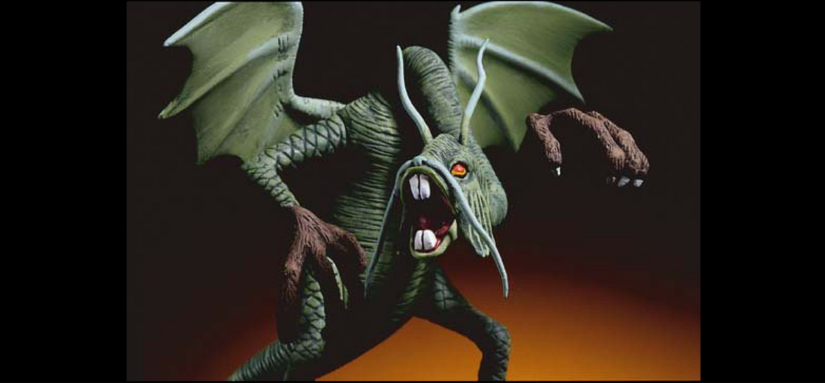
The Jabberwock, with eyes of flame,
Came whiffling through the tulgey wood,
And burbled as it came!

If there’s any certainty in lessons learned during a life in retail, it’s this: never judge, never assume, never expect. You will find yourself embarrassed, you will make an ass of yourself and you will see all expectations eclipsed.

Time passed and Dave’s visits tapered off a bit. I knew he was working on a big construction job, so he must have been overwhelmed. His subscription file grew, but I was far from alarmed.

I found myself with a rare day off. I discussed it with my lovely little girl and we decided to take advantage of the clock and make it a daddy/daughter day. I went online and found a crazy kid’s show playing at a local theater. It was a strange and mysterious version of “Alice in Wonderland” that nearly defied explanation.

In this unique little production, Alice (not the one from Lewis Carroll’s novel, but the one from the Brady Bunch) wakes to find herself in a surreal world where the classic story unfolds and is frequently interrupted by the characters we know and love from the story breaking out into songs by modern rock bands that had one hit and faded into obscurity.

I know.

But there were glowing reviews and parents online raved, so the tickets were procured. We had a nice lunch and went to our matinee. The lights went down and the wackiness ensued. It started off like gangbusters. Weird pop-culture references that cracked us both up, but only I really understood. It was obviously designed to appeal to both children and their grown-up dates.

The show veered from the “modern” world of the Brady Bunch into the tilted one of Sir Caroll. Hannah was utterly confused but got a kick out of Alice being an old maid. Then, out of nowhere, the stage exploded into a Cirque du Soleil extravaganza. Lights, costumes, stilts, the whole nine yards.

The cast broke out into song, danced and cartwheeled their way through a Frankie Goes to Hollywood number and finished with a flourish. The lights came up a bit, the audience cheered wildly and the cast froze in a musical tableau.

My hands stopped mid-clap. My mouth hung open. I stared closely at the stage, my neck craning to its breaking point.

There in the middle of this loony bunch of actors, standing straight upon his head, was my very own Dave.

What? How? Why?

The show continued and I was transfixed. Here was a man who I only pictured with a saw and power drill in his hand, walking on stilts as if they were grafted onto his legs. He changed costumes and voices like some sort of savant. He took up swords and plastered on make-up and leapt through the air like a gymnast. And he sang! This quiet hulk of a man that I knew from my store might as well have been an elaborate illusion. He was brilliant and hilarious and altogether shocking.

As the show wound down, the Jabberwock entered the stage. It was an enormous and intricate piece of puppetry. All beak and claw and roaring fire. Hannah actually shrunk back into her seat. It traipsed the stage, tearing limbs and eating characters whole. There must have been three actors in there manipulating this patchwork beast.

From the wings came the savior. Bells hung from his pointy hat. His green slippers curled at the front and sent him sliding in all directions. He swung his mighty plastic sword like a baseball bat. An Arthurian jester had come to slay the savage monster.

“Get him, joker-man!” whispered Hannah.

“Get him, Dave!” I whispered beside her.

As if he’d heard our plea, Dave ran across the stage, grabbed a rope, swung around twice, flipped upside down, did a somersault, handed his sword to a fellow thespian, juggled some fruit, took back his blade, leapt over two village commoners and let fly his weapon. Red scarves shot out of the Jabberwocky’s neck, signifying blood. It reached up with its scraggly claws and grabbed for its beak, but found only air.

Off with his head, indeed.

One, two! One, two! and through and through
The vorpal blade went snicker-snack!
He left it dead, and with its head
He went galumphing back.

We adults roared with approval and our children screamed, frightened but loving every minute.

And Dave raised his arms in victory, elated. So much so that he broke out into a bluegrass version of a Duran Duran song. The cast joined in, the townspeople were regurgitated from the headless beast and Alice was sent on her way, back to her little room beside the kitchen at Chez Brady.

Days later, I was deep into my work at the store, head stuffed under some back-issue bins.

“Howdy, stranger!” A voice bellowed.

“Howdy yourself,” I replied, shaking Dave’s hand. “Where you been hiding?”

Dave smiled. He looked relaxed. At ease with himself in a way I’d never seen.

“Just been working on a project,” he said. “It’s taking up all of my time. But the hard part’s over, so I can visit more often again.”

I decided not to say anything for awhile. If Dave didn’t want to talk about his “project,” who was I to pull the covers?

We chatted up a storm as usual, walking the shelves and speaking passionately about comedy and tragedy and romance. I was no longer surprised at how adept Dave was at discussing these themes and how they lifted themselves from the written page into our hearts and minds.

Dave looked at his watch and grumbled, “Gotta get going. The new building site is all the way across town. Hate traffic. Hate construction. Hate.”

Again, the curtain fell over Dave’s face. It was painfully clear that this dual-role life he was living was eating him up inside. But maybe it wasn’t just that. Maybe he needed to talk to someone about it. Sometimes, letting the hero know you’ve discovered his secret identity can be a relief of epic proportions.

“By the way,” I said flippantly, “you make an excellent woman.”

Dave looked perplexed. “What did you just say?”

“I’m also very impressed that you can put lipstick on with your toes while wearing a colander on your head. Not an easy feat to accomplish for any six-foot-tall man.”

There was a long pause. Dave turned beet-red.

“When did you see it?” He said softly.

“A few days ago,” I replied with a smile. “Went with my daughter. Almost had a heart attack when I saw you up there! Why didn’t you tell me you were an actor?”

“Because I’m not an actor,” Dave demanded. He smiled a proud smile and announced, “I’m a clown!”

We both laughed hysterically, struck by the hilarity of such an honest declaration in the heart of Los Angeles, city of stars.

“And hast thou slain the Jabberwock?
Come to my arms, my beamish boy!
O frabjous day! Callooh! Callay!”
He chortled in his joy.

Over then next few months, Dave spilled the beans about the true trajectory of his life. From a small town in Florida to a large city to a road trip bound for California. About his love affair with theater and the circus and commedia dell’arte.

How he’d have to time everything just right to get from construction sites to whatever theater he was secretly performing in. How he’d rehearse late into the night with paint under his nails and a rumbling in his belly. How he desperately wanted to leave behind the world of drywall and staple guns.

“Sometimes, I imagine spending every day just making people laugh. I imagine looking out and seeing happiness and wonder. I imagine it every night and then I wake up and find myself with a hammer in my hand.”

I thought carefully before responding. I take imagination seriously.

“I read somewhere that we think in pictures. That the more we think about what we love, the more likely we are to find it in front of us. Don’t hide your pictures away, Dave. You’re not just looking at them. You’re in them.”

We talked for many weeks after that. Dave finally “outing” himself and regaling me with stories of covert auditions and much heartache (which it seems is a constant in the life of a performer, clowns especially).

Then the day came when Dave’s golden ticket presented itself.

He came into the shop, wound tightly. Obviously, something was up. Something big.

“What’s going on, Dave?” I said, concerned. “You look kind of pale.”

“Disney!” he shouted, startling some of the milling customers.

He went on, out of breath. “There’s an opening at the park. I have an audition next week. There’s only one slot. They said they need someone who can walk on stilts, juggle and improvise.”

“Well, that’s got you written all over it!” I said, beaming.

Dave’s jaw tightened. “But there are going to be hundreds of people auditioning for this and they’re only picking one performer. The rooms will be packed with young kids more athletic than me. Kids whose knees don’t creak when they get up in the morning. Who don’t have scars on their hands and wrinkles around their eyes.”

I shook my head sympathetically and said, “Yeah, but none of them have slain the Jabberwock. Saw it with my own eyes. Truly an amazing sight.”

We laughed together, two friends old enough to understand what victory really is. Not a job or a paycheck or a title. It’s knowing who and what you are. Without fear of reproach. Without need to hide in the dark. It’s not the slaying of the fearful Jabberwock. It’s the courage you arm yourself with on the way that really counts.

‘Twas brillig, and the slithy toves
Did gyre and gimble in the wabe;
All mimsy were the borogoves,
And the mome raths outgrabe.

Yesterday, my friend Dave closed his subscription account. He’s moving away. Too far to make any weekly visits. It was a bittersweet moment for two men who’d shared so many fine stories and spent so many hours discussing the truth of things. But that was yesterday.

Today, my friend Dave moved even closer to his dream. Just a few blocks away, in fact. From one end of our country to the other he traveled, pursuing something he wasn’t sure he could accomplish. Today, my friend Dave walks the fabled streets of Disneyland, a knight on stilts, forever on parade, only laughter left in his wake.

He’ll be teaching the younger kids what it really means to be a clown. What it means to live your truth. What it means to slay your very own Jabberwock and live to tell the tale.

Imagine that.

Jud Meyers’ ReTales – I Witness

YEAR ONE

His walking stick preceded him. It was the size of a small tree. He didn’t seem to really use it, but it made him look regal. Majestic. His red-haired queen followed closely behind, keeping her place. She was in her early forties, he in his late. Both were well-groomed and dressed in immaculate fashion.

When someone makes an entrance like that in a small retail store, you immediately know you’re in for a wild ride. Tom knew how to make such entrances and during his era at the shop, “wild” was indeed an appropriate description.

“Good evening, sir!” he bellowed.

“And a good evening to you!” I replied.

He studied the four walls. It was our first year in business, so I was still filling out the shelves and putting the puzzle pieces together. He looked me straight in the eyes and announced, “I heard whispers about a new store on the boulevard, so I had to come and see for myself. Looks like you’ve made a very nice start so far. With a few adjustments here and there, this place could achieve greatness!”

Bewildered, I looked over at his wife. Sheila stood quietly by the door. She looked up briefly, then turned her eyes away.

We chatted for a good long while, getting to know one another. Tom told me about his history with the other retailers in the area. He’d been shopping at another store close by, but found himself disenchanted with the service there. While he spoke of his passions for Batman and Thor, he quietly piled one item after another onto the check-out counter. Sheila still looked at the ground, making herself small.

Sheila wore a bit too much make-up, applied an excessive amount of hairspray and adorned herself with flashy jewelry. But beneath the façade lived a naturally attractive woman. The two of them made quite a pair.

I rang up Tom for $300 in product and looked forward to learning more about this strangely fascinating couple. I would come to find that some knowledge is not always welcome and some of the darkest comes “not single spies, but in battalions.”

Tom and Sheila began visiting me once (often twice) a week. Because they were what we refer to as “big ticket” customers, I gave them my undivided attention and made sure Tom got everything he asked for.

He spent extravagantly that year. Tom wasn’t content with one of anything. Only multiples would satiate his hunger. Of course, I was only too happy to oblige and ordered everything he desired. And ordered. And ordered. And ordered.

His deep-rooted obsession with the Dark Knight dominated his buying habits. Statues, action figures, graphic novels, memorabilia. If Batman was involved, he bought it. Twice. Our monthly order meetings were dominated by the constant mention of Tom’s name.

“How many of these statues should we get?”

“Three for Tom” I’d reply, before even thinking about our other customers.

“Does Tom want the entire set of these figures?”

“Four sets,” I’d reply, “to start.”

Tom and I spent many hours in the store talking about our personal lives. He’d been quite a well-respected and highly paid doctor for many years. He’d met Sheila when she was very young. She was an administrative assistant back in their hometown. He’d swept her off her feet and taken her to the big city. She no longer had to work and became a doctor’s wife. An idyllic story for a successful man. Until he came down with an illness. One that none of his colleagues could diagnose.

He showed me photos of himself taken only a year before. Emaciated in one photo, enormously heavy in another. To go from one hundred to three hundred pounds, then back to a normal weight in a matter of months was a frightening transformation.

“The pain was excruciating,” Tom told me. “If not for Sheila, I certainly wouldn’t have survived the experience.”

Sheila smiled sheepishly, blushing at the acknowledgment.

“She nursed me back to health,” Tom continued. “She fed me, bathed me and made sure I took all of my medications, even when I refused.”

For the first time since they’d been visiting the shop, Sheila became animated. She lifted her head and fixed her eyes on Tom. Her gaze was dark and pained.

“No one forced you to take your meds, Thomas!” she growled. “You took them the way you take everything in your life. By the handful!”

With that, she graciously excused herself and walked out.

Tom watched her go, mouth agape. He cleared his throat and quietly confided, “It’s been hard on her the last few years. I almost died and left her on her own. To this day, I still fight the tremendous pain. Without the medication, I wouldn’t even be able to leave the apartment.”

It occurred to me that I’d often seen him taking medication in my store. He’d usually put a pill into his mouth as he entered and sometimes, he’d turn away mid-conversation to administer his dose.

As usual, I helped him out to his car with his many boxes. Sheila sat in the passenger seat, quietly fuming. As I headed back inside, she rolled down her window and grabbed my hand.

“I apologize for my outburst,” she said. “It was wrong of me to do that in your store. It won’t happen again.”

“Nothing to apologize for,” I cheerfully replied. “We’re all humans with strong emotions. We don’t just leave them at home when we go out into the world, do we?”

Sheila’s eyes filled with tears. She let go of my hand and rolled up her window. In the driver’s seat, Tom stared ahead, stoic. I left them there in the parking lot, dreadfully sure there was more of this to come.


YEAR TWO

Tom and Sheila began to change. She became more vocal about what he purchased and his irritation with her grew.

“Do you really need two of those?” Sheila would say.

He’d reply, “Do you ever not get the things you want?”

She’d roll her eyes and scoff, holding her tongue in public.

Eventually, as is usually the case with these types of scenarios, they would stand at my register and hear the words I’ve so often spoken in my time in retail.

“I’m afraid your card’s been declined.”

They would whisper to one another, shrug it off and hand me a different piece of plastic that would work. Or not.

Their outward appearance also changed. He took to wearing the same exact clothing every time I’d see him. Not dirty, by any means. Just exactly the same. Sheila’s outfits had become far less regal and far more casual. The jewels had been shed.

Their communal visits were becoming unbearably tense. So Tom did what he needed to do in order to keep himself happy. He began coming alone. Late at night, he’d drift in, popping a pill and chewing it down quick. He’d pile up the counter with product and stay for hours on end. His sentences became long and drifting and made their way from one random topic to the next. It was difficult to keep my focus in the face of his condition.

When he ran out of credit cards, he began to bring in his own rare collectibles to sell or consign. He had a marvelous collection and he demanded I take it in trade. So the journey into year three of Tom’s visits was littered with scatological conversation, an influx of rare product and a dark foreboding of something altogether inevitable.


YEAR THREE

“I have to talk to you in private.” Tom whispered. “You’re the only one who’ll understand!”

His eyes were wild, his hair askew. Small pieces of yellow pills were wedged into the crevices of his teeth. He looked behind him as if he were being stalked.

“They’re watching me!” He said, desperate.

“Who Tom?” I asked. “Who’s watching you?”

“I don’t know yet. They’ve been following me. I think they let out the air from my tires. All of my doctors don’t believe me, but there’s something in my blood. Something trying to get out. I think maybe they put it in me to experiment and see what would happen. But I’m working on a cocktail of vitamins and minerals that’s going to get it out of my body. They know I’m onto them and don’t want me to reveal what they’ve done. If you knew what I knew about what’s going on, you’d be as afraid as I am!”

I was afraid all right. Here was a delusional man, chewing morphine on my shop floor and confiding in me as his only true friend in the world. There are limits to how far we can venture into the personal lives of our customers. Communicating about ourselves on the shop floor is one thing. Becoming intimately involved in someone’s fractured fantasies and tenuous relationships is something of a taboo in retail. It’s a slippery slope and rife with danger.

I told him he needed to leave. To go home and get some rest. I ushered him out as calmly as I could and hoped he would be okay. The very next night, Sheila came into the store.

She wore torn sweatpants and an old t-shirt. Her face was devoid of make-up, her eyes were red and swollen and she looked utterly exhausted.

“I’m so sorry for coming in like this,” she said. “I know it’s not right, but I have to talk to someone who knows him. I have to know if it’s just me.”

I closed a few minutes early, locked the gate, got some tissues and listened to a woman on the brink. A woman who’d been struggling for quite awhile in silence.

“He used to be such a strong man. Everyone respected him. We went to functions and ate at expensive restaurants. Then he got sick and everything changed. They couldn’t figure out what was wrong with him. He was in so much pain and the medications they gave him weren’t helping. So they gave him more and he started to take twice as much as he should have. I was his nurse for a whole year. We never left the house. Never. Do you have any idea what that does to a marriage?”

It would have been easy to be dismissive. To detach myself and say, “I’m just a comic- book retailer. You should talk to someone else.” Easy for others. Not so for me.

“He can’t stop taking the pills,” she continued “And the more he takes, the more delusional he gets. He thinks someone is following me and filming me in the shower. He shouts and rages and accuses me of being involved in some plot to kill him. He’s up all night and barely sleeps at all now. I don’t know what to do.”

Sheila told me what I already knew. They were in dire financial straits. She’d taken a job as an assistant at a bank for some extra cash. She said that it actually empowered her and reminded her that she had a life and a mind of her own.

“I’m going to leave him,” she said. “but I’m afraid of what he might do to himself. Just tell me this. Do you think he’s insane?”

Slippery. Slope.

“I think…I think he needs some help,” I said. “Just not necessarily from you. Maybe you could use some help as well. Just not necessarily from me.”

Sheila thanked me, apologized a hundred times and went back to her life of emotional distress. Her husband had become someone she no longer knew. What’s more, he’d become someone to fear. Someone to avoid. Someone to escape from.


YEAR FOUR

“They’re turning her against me!” Tom cried. “They’ve put cameras in the walls. I found the holes. They’re filming her when she’s naked and they know I know! They’re making her divorce me!”

One of my customers passed by and brushed his shoulder.

“Do you know him?” Tom whispered. “Have you seen him before? I think I’ve seen him outside my house!”

“Tom” I replied, “That’s one of my subscribers. He’s shopped with us for years. He’s an accountant.”

Sheila left Tom that year. She got her own place and her own life. As part of their divorce agreement, she was to get half of his entire collection. They needed someone to appraise and purchase it as soon as possible. Of course, they came to me.

We purchased Tom’s collection. It was enormous and, of course, included four years of product we’d sold him. We gave them a fair price and wished them both well.

Tom continued to stop in. Some days his eyes looked clearer than others. He still spoke of a medical conspiracy bent on destroying the world.

His vitamin elixir was apparently a success. It now rolled back time and made people younger. He was working on it in the room he rented from a friend. He was experimenting on himself and the results, to him, were dramatic.

The last time I saw him, he told me he’d discovered the secret of how the “real” world works. He told me he could control other people’s thoughts and make them do whatever he wanted them to. He believed he was at the forefront of ushering in a new age of humanity. He believed his wife never understood how special he was. He believed he had finally become what he always knew himself to be. A superhero.

He thanked me for believing in him. He thanked me for being his friend. Then he disappeared.

Most of what I do as a retailer (besides selling product) is wrapped up in the personalities, histories, relationships and idiosyncrasies of my customers. I spend very little of my time actively involved in your lives but most of my time hearing about them.

I see your highs and lows. I see your babies born and families grow. I see your jobs and loves, both won and lost. I see your lives grow and blossom over time. And I also see them unravel and can do nothing at all to stop it from happening.

I stand behind my counter and wait for you. I wait for the door to open and your stories to step in with you. I am the watcher. I am the listener. But mostly, I am the witness. To both the good in you and the bad. I see the things that you yourself cannot. And often, very often, I see it all and say nothing.

Jud Meyers’ ReTales – An Invitation

“Daddy, can I press the buttons?”

My daughter, Hannah, stood on a chair at my counter, reaching out for the cash register. She loves it when the cash drawer pops open. Surprises her every time. She’s spent many hours behind my counter. She was only a year old when we opened our doors and I carried her around on my hip while I served customers. Now at seven years old, she’s getting to be a good deal taller than my waist and has free reign of the place. She knows the best hiding spots, she knows where things go and remarkably, she knows my customers. Guess what? They know her too.

I take great pride in the fact that she gets to tell her classmates that “my dad sells comic books!” It makes her the coolest kid in school. I fill the school library with books and hang Free Comic Book Day posters in the halls every year. I’m a rock star to the little boys. I’d say it makes them respect her more than the other little girls, but one of them just knocked out her tooth with a volleyball, so apparently “comic-book-cool” has its limits.

When she was tiny (and we still had carpet on the shop floor), she’d crawl all over the place, staring at herself in the display cases. “Honey, don’t lick the glass! It’s not good for you,” I’d say, wiping the displays with Windex for the hundredth time. “Da!” She’d reply, tongue hanging out.

Back then, my dog came to work with me. She didn’t have a backyard, so I made a little area for her in the back room. I worked long hours, as most new retailers do, and I didn’t have the heart to keep her locked up away from me all day. Not to mention the mess I’d come home to. It wasn’t unheard of for customers to come to the door and find a handwritten sign in the window.

“Back in five minutes. Taking Faith for a quick walk. When she’s gotta go, she’s gotta go!”

Everyone understood, of course. It was a one-man (and one-dog) operation back then and my customers are the kind of folks who don’t lack patience.

Hannah’s grown up in the kids section of the store and knows what a “spinner rack” is. More and more kids don’t these days and that’s just a crying shame. I’m forever regaling my poor customers with the story of her spinning the display, grabbing a copy of the latest Betty & Veronica digest and rushing up to the counter with it.

“Daddy! Can we buy this?” she pleaded. “Please?”

“Honey, we kind of already did.” I replied.

Sometimes, she comes with me to work. She has her own chair with a cup holder. She has an endless supply of colored markers, sharpies and paper. A little fridge in the back for juice and snacks and of course, much needed paperclips and rubber bands for those special art projects. I often find her hiding upstairs in the storage area, lying on her back and lost in her imagination, hidden among the toys and boxes. Some kids have tree-houses. Hannah has a comic-book store “attic.” On occasion, she’s been known to lie at the top of the stairs, crushing packing peanuts and sending them raining down onto the heads of my unsuspecting employees.

“It’s snowing!” she cries out. “Boogedy-boogedy!”

Like many proud parents, I get to display her unique art pieces in my back room. Super-Dogs and crazy pictures of Mr. Toast and Shaky Bacon. Recently, she made a wonderful drawing of “The Flash’s Pet” and I was thrilled to put it in the back room. When she came in and saw it there, she asked “Why isn’t it out front? Why are you keeping it hidden in the back?” So, I brought it out and put it behind the register.

After seeing it there, she said “Everyone else’s art is framed and on the wall. Why can’t mine be?”

“Good point.” I said. So, I framed the picture and hung it out on the shop floor alongside the original Alex Ross paintings and the John Cassaday pages. It hangs in the kids section and we plan to update it whenever she’s inspired to draw something new. I asked her what we should do if someone asks to buy it. She replied, “depends on how much they want to buy it for!”

I glow with pride. Truly.

Together, we’ve watched our customer’s children grow over the years. She knows some of the regulars who have kids and they have a kind of “play date” while their parents chat and shop the store. Rarely a day goes by that I don’t have a “how’s the kids?” conversation with one of my regulars. While our children are growing up around us, we’re growing as parents and it’s fun sharing the stories while we talk all things comic-book.

My daughter will grow up with memories of my wife bringing tuna sandwiches to the store on a lazy afternoon. Of stacking shortboxes and fashioning them into a table, kneeling down around them as we laugh and eat our lunches. There’s nothing more wonderful than watching the two of them strolling through the front door, my wife smiling and my daughter running to the checkout counter. My wife is also in retail, so we return the favor at her store every chance we get!

Jeremy, one of my long-time subscribers, just became a father. Unfortunately, he also just lost his job. While he and his wife are ecstatic, they’re scared and uncertain. But they come in every other week together, religiously. Comic-book store, nail salon, supermarket. Him, her, them.

Jeremy’s cut back on his spending (a good thing, to be sure), but he’s held onto his store visits and his periodical purchasing. He’s moved to trade paperbacks for some titles and doesn’t have a problem waiting for some stories, just not all. I recently asked his wife how he was holding up and how things were going with the job hunt.

She was mostly positive and added, “Thank God he has this. He cut out everything else, but this is his special treat and I’d never let him take it away from himself. Plus, it gives us time to be out together and not be cooped up at home. Every little thing counts.”

Why am I telling all of this to you, faithful reader?

Well, I know there’s lots of debate (on this site and countless others) about brick-and-mortar comic-book stores vs. online discount services. Opinions are varied and heated, with good points made for both options.

Times are tight. We look for ways to cut corners. We look for ways to be smart and spend less. We look for ways to make it through this recession intact. Here’s what we don’t look for. Reasons to stay home and worry.

We go to the movies to laugh and be entertained. We exercise to keep our minds sharp. We meet friends for drinks and accept invitations to parties. Sure, we spend more time online. Facebook, MySpace, Twitter. But these sites we visit and the messages we post revolve around one thing. Communication. It’s not a time for us to bury our heads in the sand. It’s a time to talk. To socialize.

Certainly, saving money is paramount in the economic climate we find ourselves in. It’s unprecedented and filled with mystery. It’s my position that in times of great trouble like the ones we’re facing right now, the most important thing we can do for ourselves is to fall back on the people and the places we love and to support our community in the process.

Most people don’t come to my store to just pick up their books and leave. They come for a shopping “experience.” They come to see the colors and listen to the music and share their opinions. Many drive from far away and brave the traffic every week because it’s one of the rare things they do that isn’t jaded and frightening. We have many things in our lives that remind us we need to be responsible adults, but few that remind us to have the spirit of a child.

I’m no fool. I know you can hop online and get things a heck of a lot cheaper on Amazon than you can in my retail store. We discount what we can and make up for it with customer service, ambience and a deep sense of family. We’re a small store, not a giant warehouse. I work as hard as I can to pay my mortgage and cut corners. I run a tight ship so we don’t find ourselves sinking. And I rely on my customers to shop with me and not lose themselves in the price wars of the Internet conglomerates.

Frankly, they can’t give you what I can. They can’t spend time with you and hear about the joys (and troubles) of your day. They can’t have a signing where you have to show up in person to hang out with your favorite creator. They can’t invite you to Free Comic Book Day, where families and friends meet in person and do the thing we need so very much to do right now. Celebrate.

And did I mention that there are stacks of comic books in our store that day that are…FREE? Discount doesn’t get much deeper than that!

The fact is, I could be making a heck of a lot more money doing something else with my life. Even in this dreary economy we’re trapped in, I’m qualified for quite a few well-paid professions. But I choose to do what I love. Even more important is the fact that my child learns that lesson from me every day. Do what you love. It makes you feel better and enjoy your life, especially when times are their darkest. This applies to both work and play. Which is exactly what we all do in your local comic-book retail store. Play.

Like everyone else, I need to earn a living. I have books that need to be sold. And no matter what the word on the street may be, the weekly periodicals are still the bread on which the butter sits. Yes, trade paperbacks and hardcovers are taking the industry by storm and my store reflects that change. Embraces it.

But the never-ending soap opera of the comic-book periodical has made its way through wars, witch-hunts and economic devastation. Are we truly to believe that the tactile concept of holding paper in our hands and being thrilled by its content will suddenly disappear because of a technological revolution?

I don’t think so. And every day I come to work, I unlock the door, turn on the lights and prepare my store for you. I clean the counters and turn on the music and tidy up the joint so when you come in, you feel safe. Safe from the raging world outside. Safe from the pounding images on your computer. Safe from the stress crawling through your mind. Safe.

It doesn’t take that much effort to escape into the digital world of your computer. Heck, you’re reading these words right now, trying to decide if you care one bit for what I have to say. Coming into a comic-book store requires time. It requires effort. It might even require a few extra dollars. But would you rather sit at home and hide away or would you rather come to the party?

My shop is filled with customers on a Wednesday. People are buzzing about “Old Man Logan,” quizzing one another about what happened to “Batman” and trying to guess what the next “event” will be. A little girl grabs for a copy of “Amulet.” A little boy sits by the spinner reading “Bone.” A businessman inspects that vintage copy of “Silver Surfer” he’s been coveting forever.

Two students from the local University are in a heated debate about Garth Ennis. Someone’s asking me what the song is that’s playing on iTunes while he tries on a Green Lantern ring. Two of my subscribers are flirting with one another in the indie section. They’ve been at it for weeks, but can’t seem to pluck up the courage to ask each other out.

I close my eyes and breathe it all in. There’s an energy in this small box that can’t be found anywhere else.

Unless of course, you’re in your own local comic-book store in your own neighborhood in your own state in your own country. You can’t get this feeling from a screen. You can’t get it typing at a keyboard. You’ve got to show up. You’ve got to be there to be a part of the experience.

My daughter watches me close my eyes and doesn’t seem a bit confused by what I’m doing. Maybe she’s seen me do it before. Or maybe she just understands what it is to be lost in the wonder of life with your friends and family close by.

“Daddy, can this be my first job when I grow up?” she asks me.

I open my arms to everyone around me. “This is all yours if you want it, honey. All of it.”

“I do.” She says, her smile adding even more light to the room. “I want people to come into our store forever and ever and always be happy.”

An invitation has been offered you. Come into our stores, everyone. Don’t sit at home. You’ll find us all there, waiting to welcome you. To give you an experience you so desperately need after a long, hard week. An experience you can’t get at home on your computer or waiting by your mailbox.

And if you come into my store, you’ll find a beautiful girl behind the counter. Growing, growing, growing. Wanting you to come into our stores forever and for you to always, always be happy.

Come see our L.A. location!
5118 Lankershim Blvd
North Hollywood, CA 91601
(818) 980-BOOK

Connect With Us

Search